How to use AI in real estate presentation without lowering the standard
AI is entering real estate presentation at the same time that the visual standard for serious property marketing is becoming less forgiving. Buyers are accustomed to polished media, but they are also quicker to notice when an image feels excessive, synthetic, or disconnected from the actual asset. This creates a narrow but important distinction: AI can improve real estate presentation, but it can also weaken credibility when it is used as a shortcut.
For high-value property, especially land, ranches, development sites, remote acreage, and investor-facing assets, the problem is rarely solved by making an image more dramatic. The deeper problem is comprehension. A buyer needs to understand scale, access, terrain, setting, surrounding context, and the visual character of the property well enough to decide whether further review is justified. AI is useful only when it serves that task.
The objective is not to make the property look more impressive than it is. The objective is to make the property easier to read.
AI is not a substitute for visual judgment
In real estate, visual material carries an implicit promise. It tells the buyer what kind of asset they are looking at, what level of care has gone into its presentation, and whether the seller or broker understands how the property should be evaluated. When AI is used without discipline, that promise can become unstable.
The most common error is treating AI as an image improver in the broadest possible sense. A poor listing photo becomes brighter. A flat aerial view becomes more cinematic. A property image becomes sharper, cleaner, or more stylized. These changes may look effective at first glance, but they do not necessarily make the property more understandable. In some cases, they move the image further away from the thing the buyer actually needs to evaluate.
This is especially dangerous in premium real estate and land presentation, where credibility matters more than novelty. If an image appears artificial, over-rendered, or loosely connected to the real property, it can introduce doubt rather than confidence. The buyer may not be able to identify the technical reason, but the effect is still there: the presentation feels less grounded.
AI should not replace visual judgment. It should extend it. The person directing the image still has to understand what the visual is supposed to explain, which aspects of the property must remain stable, and where interpretation is useful without becoming distortion.
The standard is not beauty alone
Real estate imagery is often discussed in terms of beauty: better light, richer color, cleaner composition, stronger mood. These qualities matter, but they are not enough. For serious property presentation, the standard is more complex.
A useful property visual has to remain specific. It should preserve the recognizable structure of the site, the spatial relationship between important features, and the visual logic of the land. It should help a buyer orient themselves, not simply admire the image. Aerial and terrain-based visuals are particularly sensitive to this problem because small changes in slope, access, road placement, or scale perception can alter how the property is understood.
This is why AI-assisted real estate visuals require more restraint than many other forms of image production. A luxury product image can be stylized heavily because the object remains simple and controlled. A landscape, a ranch, or a development site is different. It is not only an image; it is a spatial asset with practical implications.
The standard is therefore not “make it look better.” The standard is closer to: make it clearer, more coherent, and more useful while preserving the property’s underlying reality.
Uncontrolled enhancement creates a credibility problem
AI can produce visually persuasive material very quickly. That is both its strength and its risk. The output may look confident even when it has introduced changes that matter: a road becomes more legible than it really is, terrain looks smoother than it should, vegetation density changes, access seems more direct, the surrounding context becomes more picturesque, or the atmosphere of the property shifts into something too cinematic.
For some marketing contexts, these changes may seem harmless. For land and high-value property, they are not trivial. Buyers are not only responding emotionally. They are evaluating practical questions: Can this land be reached? How does it sit? What parts appear usable? What is the surrounding context? What does the terrain imply? How does the property relate to nearby roads, ridgelines, water, neighboring parcels, or development patterns?
A visual that answers those questions poorly, even beautifully, is not a strong visual. It may generate attention, but it can weaken serious review.
This is why AI in real estate presentation should be treated less like an aesthetic filter and more like a controlled interpretive tool. It can clarify, reconstruct, refine, and organize visual information, but only if the source material and the intended reading of the property remain central.
Source discipline matters
The quality of AI-assisted real estate imagery depends heavily on the quality and interpretation of the source material. A credible workflow begins with existing visual and spatial information: listing imagery, aerial photography, satellite imagery, terrain data, mapping context, parcel information, reference photography, and any project-specific material that helps define the asset.
These sources are not interchangeable. A drone photo may show atmosphere but fail to explain the larger site. A satellite image may show position but flatten terrain. A parcel map may define boundaries but provide no sensory understanding. Terrain data may reveal slope and landform, but not the property’s visual character. The task is to combine these materials into a more readable whole without pretending that one source contains everything.
This is where controlled AI-assisted production becomes useful. It can help translate fragmented information into a visual layer that is easier for buyers to read. But the output should remain tied to the source structure. Roads, access points, terrain movement, visible development, vegetation patterns, and contextual relationships should be handled with care.
Without source discipline, AI becomes decorative. With source discipline, it can become part of a serious property visualization process.
Premium real estate needs restraint
The more valuable the asset, the less tolerance there is for visual exaggeration. Premium presentation does not require maximal drama. It requires confidence, clarity, and control.
A common mistake in AI-assisted real estate imagery is importing the language of entertainment rendering into a context that demands trust. Heavy atmosphere, impossible light, hyper-detailed surfaces, excessive depth, and cinematic grading can make a property look impressive but less believable. The image begins to compete with the asset instead of clarifying it.
Restraint is not the absence of refinement. It is the discipline of knowing what not to intensify. In real estate presentation, this can mean neutral color handling, credible lighting, moderate texture, stable perspective, and a clear hierarchy of information. The visual should have enough finish to be presentation-ready, but not so much stylization that the buyer starts questioning what is real.
For land, this restraint is even more important. A ranch, remote acreage, or development site often needs a visual that can be studied. The buyer should be able to examine the image, compare it with other materials, and use it as a reference during discussion. If the image feels too much like a concept artwork, it loses some of that utility.
The best AI use is controlled interpretation
The strongest use of AI in real estate is not the production of artificial spectacle. It is controlled interpretation.
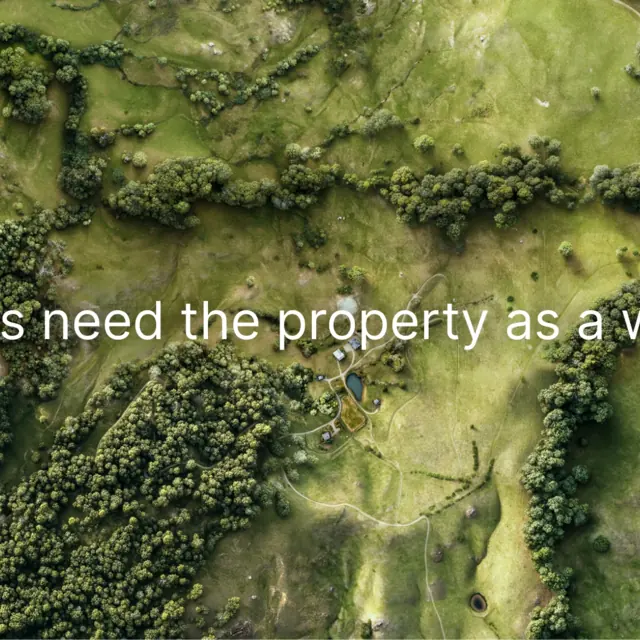
This means using AI to help reveal what is already present but difficult to read: the form of the terrain, the continuity of access routes, the relationship between open and vegetated areas, the scale of the site, the setting around the property, or the visual character that ordinary source imagery fails to communicate clearly.
In this sense, AI is not the author of the property image. It is one part of a broader visual production process. The important decisions remain editorial and spatial: what should be emphasized, what should remain neutral, what must be preserved, and what level of refinement is appropriate for the asset and its audience.
A serious buyer does not need a fantasy version of the property. They need a visual that reduces avoidable uncertainty. They need to understand enough to ask better questions, compare the asset more intelligently, and decide whether to move into deeper review.
This is where AI can be valuable: not by replacing due diligence, site visits, surveys, or broker knowledge, but by improving the visual layer that precedes them.
A better visual layer before deeper review
Real estate decisions are rarely made from a single image, and they should not be. But the first visual layer matters because it shapes the quality of attention. It determines whether a buyer understands the basic logic of the property or simply moves past it. It influences whether a conversation begins with confusion or with a clearer sense of the asset.
AI-assisted visuals can support that early stage when they are built with accuracy, restraint, and property-specific judgment. They can make remote review more practical, strengthen investor-facing materials, and help brokers present complex land in a way that is easier to evaluate. They can also create a more coherent bridge between raw geographic data and polished real estate communication.
The standard should remain high. AI should not lower the threshold for what counts as credible real estate presentation. It should raise the level of visual explanation available before a buyer visits, requests additional materials, or begins formal review.
Used poorly, AI makes property marketing look less trustworthy.
Used carefully, it can make complex property easier to understand.
For presentation-use limits and source context, see legal and data source notes.