Why ordinary listing media falls short
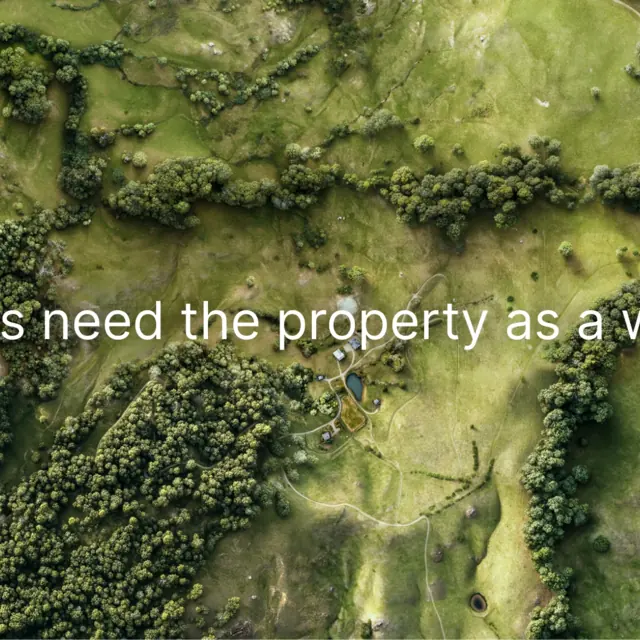
High-value land is difficult to understand through ordinary listing media. A standard satellite image may show the parcel from above, but it often fails to explain terrain, access, slope, scale, setting, and the practical character of the land. Drone photography can be useful, but it is limited by weather, timing, flight access, vegetation, camera angle, and the specific conditions of the shoot.
Terraxis was built for the space between raw geographic information and polished real estate presentation.
Starting with the property, not the Image
The process starts with source material: available aerial imagery, terrain data, parcel context, reference photography, mapping information, and any visual assets already connected to the property. These inputs are not treated as decoration. They are used to understand the actual structure of the site: how the land sits, how it moves, where access routes matter, what surrounding context should be visible, and which aspects of the property need to become clearer for a remote buyer or investor.
A controlled visual production pipeline
From there, the visual is constructed through a controlled production pipeline. Terrain structure is interpreted, source imagery is reviewed, important spatial relationships are preserved, and the property is translated into a more legible visual format. Depending on the project, the result may be an advanced property orthophoto, a terrain-based property visual, a drone-like view, or a refined presentation image for a listing deck, investor package, or broker-facing material.
AI-assisted, not AI-generated in isolation
AI-assisted generation is part of the process, but it is not the process itself.
A one-click enhancement can make an image sharper, brighter, or more stylized. That is not the objective here. Terraxis visuals are developed to keep the property believable, specific, and readable. The goal is not to invent a fantasy version of the land, but to make the actual property easier to evaluate, remember, and discuss.
Where manual judgment matters
Manual refinement remains essential. Terrain cues, visual balance, road readability, scale perception, vegetation density, color discipline, and overall presentation quality all require judgment. A property visual has to look credible, but it also has to serve a commercial function: helping serious buyers understand what they are looking at before they commit to deeper review or a site visit.
Reducing visual uncertainty before a site visit
This is especially important for ranches, remote land, large acreage, development sites, and visually complex properties. In these cases, the selling challenge is often not simply "showing the land." It is reducing visual uncertainty. A buyer needs to understand the setting, the access, the usable areas, the terrain logic, and the broader context quickly enough to have a qualified conversation.
A presentation layer for serious review
Terraxis turns fragmented visual information into a more coherent property presentation.
The final output is not a replacement for due diligence, surveying, engineering, or an in-person visit. It is a presentation layer: a clearer way to communicate the land's form, context, and visual character before those deeper steps take place.
For brokers, landowners, developers, and investor-facing teams, that clarity matters. A stronger visual does not guarantee a sale. But it can make the property easier to understand, easier to explain, and easier to bring into serious discussion.
For presentation-use limits and source context, see legal and data source notes.